
Cloud Storage vs SSD vs HDD: Security, Cost & Speed Compared (2026)

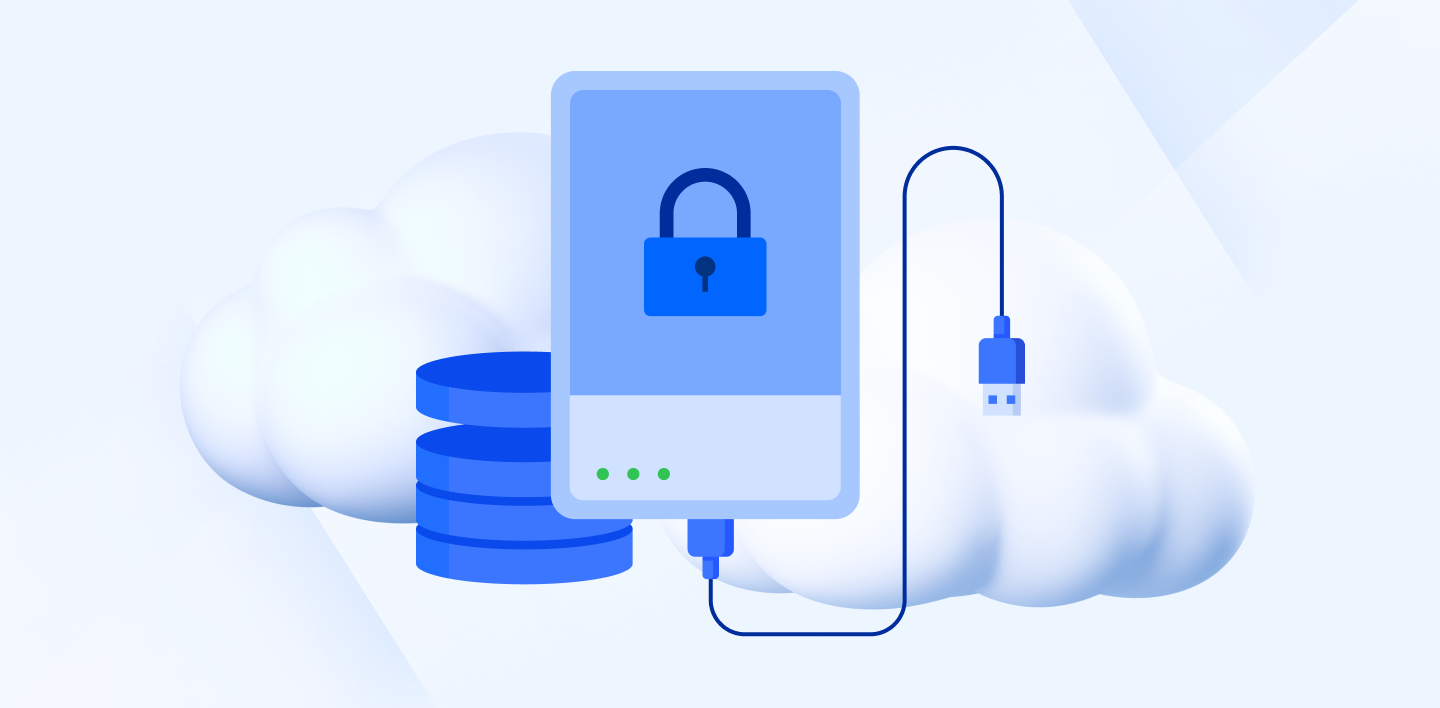
At some point, most people end up with the same question: should I just buy a hard drive, or is cloud storage worth it? And now that SSDs have largely replaced old-school HDDs, the choice is really between three things: HDDs, SSDs, and the cloud, each with different trade-offs on speed, cost, and how well they actually protect your data.
Security is where the differences get interesting. A local drive is only as safe as the room it's in. Lose it, break it, or get hit with ransomware and your files are gone. Cloud storage shifts that risk, but not all cloud services handle your data the same way.
A secure cloud storage, for example, encrypts your files on your device before upload so that nobody, including Internxt, can access them. Most other cloud services don't work like that.
This guide covers the real trade-offs across all three so you can pick what actually fits your situation.
Quick Comparison: Cloud Storage vs. HDD vs. SSD
| HDD | SSD | Cloud Storage | |
|---|---|---|---|
| Speed | 80–160 MB/s | 500–7,000 MB/s | Depends on internet connection |
| Capacity | Up to 20TB (consumer) | Up to 8TB (consumer) | Scalable, up to 100TB+ with some providers |
| Upfront cost | Low (~$0.02–0.03/GB) | Medium (~$0.08–0.10/GB) | Free tiers available; paid plans from ~$3/month |
| Long-term cost | One-time purchase | One-time purchase | Recurring subscription or one-time lifetime plan |
| Durability | Low (moving parts, vulnerable to drops) | High (no moving parts) | Not applicable (maintained by provider) |
| Remote access | No | No | Yes, from any device |
| Encryption | None by default | None by default | Varies; zero-knowledge available with some providers |
| Data recovery if lost/stolen | Difficult | Difficult | Files remain accessible via account |
| Best for | Large backups, archiving, budget storage | Speed-sensitive tasks, portability, performance | Remote access, collaboration, offsite backup |
What are the differences between cloud storage and SSD external hard disk drives (HDD)?
To understand which storage method is suitable for your needs, first, we must get an overview of cloud storage vs hard disks, their uses, pros, cons, and, perhaps most importantly, their security features.
Once you know how each storage option works, you can consider which option is better for you based on cloud storage vs local storage cost, security, and safety.
What is cloud storage, and how does it work?
Cloud storage is a service that allows users to store and access their data, such as files, photos, videos, and documents, over the Internet rather than on physical storage devices, such as local hard drives.
They no longer rely solely on the storage capacity of a device, as data is stored on remote servers managed by cloud service providers. This facilitates remote access, collaboration, and automatic synchronization between devices.
Data digitization
Cloud storage revolutionizes how we store and access information by moving it from local devices to remote servers accessible via the Internet.
Users can access their files and documents from anywhere and at any time - which translates into flexibility - as long as they have an Internet connection. In addition, multiple users can work simultaneously on shared documents, eliminating the need to email files or use USB drives.
What is an SSD?
Solid State Drives (SSDs) are a type of physical storage for computers that are becoming more popular. Unlike traditional hard drives with spinning platters, SSDs use NAND flash memory to store data instantly.
When comparing RAM vs storage, RAM is temporary memory that holds data your computer is actively using and is cleared when the power is off. Storage, like an SSD, keeps data permanently even when the power is off. SSDs offer much faster and more reliable storage than older hard drives.
Speed is the hallmark of SSDs. With near-instant access times and fast data transfer rates, these devices transform the user experience.
In addition to speed, durability is another strength of SSDs. With no moving parts, they are less susceptible to damage from shock and vibration, providing long-term reliability.
This durability, combined with power efficiency and low heat generation, makes SSDs ideal for notebook users and demanding professional environments.
SSD vs. cloud storage: pros and cons
The choice between SSD hard drives and cloud storage may present a significant dilemma if you are unsure about choosing a storage solution for sensitive data. Therefore, we will explore the advantages and disadvantages of both options to help you decide what best suits your needs.
If you want a more detailed overview of physical storage vs cloud storage, visit this article on cloud storage vs local storage.
What are the advantages of using cloud storage?
The cloud is a secure and efficient storage system and is one of the most revolutionary technological advances we have seen in the current year. In 2023, the number of companies embracing cloud storage reached 94% in 2023, so it is undoubtedly the most popular storage data for companies.
Remote access
You can access your files from anywhere with an internet connection, making it easy to work remotely, especially in distributed environments. Although HDDs and SSDs can be stored either in a computer, or externally, travelling with them can put them at risk of being lost, stolen, or broken.
Automatic synchronisation
Changes made on one device are automatically reflected on all connected devices. This ensures that you always have the latest version of your files.
Scalability
Cloud storage services are often scalable, which means you can increase or decrease your storage space according to your needs without changing physical hardware. Most cloud storage services have different plans to suit your space needs.
Automatic backup
Many cloud storage services offer automatic backup features, which protect your data against accidental loss or hardware failure.
Efficient collaboration
Facilitate project collaboration by allowing multiple people to work on the same documents and easily share information simultaneously. Collaborating on projects for remote companies, students, or freelancers can be one of the most crucial features for those looking for online storage.
What are the disadvantages of cloud storage?
Although cloud storage has numerous advantages, it also has some disadvantages that you should consider. However, with the right knowledge, you can significantly reduce any security concerns regarding cloud storage.
Dependence on internet connection
Accessing your files in the cloud requires an online connection. In areas with limited or intermittent connectivity or poor internet speed, there may be difficulties in accessing data efficiently.
While it may be tempting to work away from home in your favorite coffee shop, accessing the cloud using public wifi includes more risks than accessing your files in public using an SSD.
Public wifi is not encrypted and is, therefore, more vulnerable. If you have no other option when accessing the cloud using public wifi, consider using a secure VPN to protect you from network attacks.
Potential security issues
Although cloud service providers implement security measures, there is always a risk of data breaches or unauthorized access. Storing sensitive information in the cloud can raise privacy and security concerns. Always have a cloud storage system that protects your data at a high level.
Limitations of free storage
Free cloud storage plans often have capacity limits, which may need to be improved for users with large amounts of data. Different companies have different free options available.
Google Drive, for example, has a generous 15GB of free storage, but considering how Google treats your data, this generous storage plan is not worth the risk if you value your privacy.
Internxt, for example, offers up to 10GB of free storage and is secured with end-to-end encryption, and your files are not stored in one centralized place, unlike Google, which is one of the most secure ways of storing your files in the cloud.
Integration issues
Integration with some applications and systems may not be as seamless as with local hard drives. Some users may experience difficulties working with certain programs or performing specific tasks in the cloud.
Privacy and compliance concerns
In enterprise environments or environments with sensitive data, privacy and compliance concerns can arise, especially when cloud servers are in jurisdictions with different regulations.
When considering cloud storage, weighing these disadvantages against the advantages is essential to determine if it is the right choice for your specific needs.
What are the advantages of hard disk drives (HDDs)?
SSDs have several advantages, and although many people prefer to store their data online, as we have seen, cloud storage has some disadvantages. SSDs also have their advantages and can be equally as secure if you decide to store your data on them, but there are some disadvantages to this, too. Let's explore further.
Fast read/write speed
SSDs offer significantly faster read and write speeds than traditional hard disk drives (HDDs), improving overall system performance.
Instant access time
Due to the lack of moving parts, SSDs have near-instant access times, providing a more streamlined experience when loading applications and accessing data.
Durability and shock resistance
With no moving parts, SSDs are less susceptible to damage from shock or vibration, making them more durable and reliable.
Energy efficiency
SSDs consume less power than HDDs, improving energy efficiency and extending battery life in portable devices.
Lower heat generation
Due to their design with no moving parts, SSDs generate less heat than HDDs, which benefits the system's thermal management.
What are the disadvantages of hard disk drives (SSD)
But like everything else, there are also some disadvantages to consider:
Cost per capacity
Although prices have declined, SSDs are still more expensive per gigabyte than HDDs, especially at higher storage capacities.
Write limitations
SSDs have a finite number of write cycles, although modern technologies have significantly improved this aspect. Still, it is a factor to consider, especially in write-intensive situations.
Limited capacity in more affordable models
High-capacity SSD options can be more expensive, and more affordable models may have more limited capacities than HDDs in mass storage.
Degraded performance over time
As SSDs fill up, their performance can degrade. However, memory management and TRIM technologies have mitigated this problem to a large extent.
In general, SSDs offer exceptional performance and durability, but it is important to consider the balance between cost and capacity based on your specific needs.
SSDs vs. cloud storage: which is better for my business?
When considering cloud storage vs. hard disks and which is better for protecting your business data, you must evaluate several aspects of your needs and preferences.
Based on the above, here are some questions to ask yourself to make an informed decision.
Storage space
Determine how much space you need to store files or even employee data and whether you foresee significant growth in the future. Many cloud storage providers offer flexible business plans, ranging from small teams to large corporations, and some even offer the chance to self-host your cloud storage.
If you have a set amount of cloud storage, consider choosing a lifetime plan for a one-time payment. To ensure the security of your files for a lifetime, you will need an end-to-end encrypted cloud storage service.
You can check out Internxt's pricing plans for a full breakdown of affordable monthly, annual, or lifetime storage.
Data sensitivity
Consider the nature of the information you handle. Security and physical control may be priorities when working with highly sensitive data. Whether you store data in the cloud or on hard drives, ensure that the data is protected with encryption for the highest level of security.
Access and collaboration needs
Assess whether you need to access your data from different locations or collaborate on projects in real-time. This can influence the choice between SSD and cloud storage.
For example, if you work remotely, you will need a secure way to send your files to your team so you can edit and access the most recent version of your documents efficiently.
Collaboration is less necessary if you use storage for personal use, for example, storing or sharing photos with family or friends.
Define your budget
Define your budget for storage solutions and decide whether you prefer a pay-as-you-go model (cloud storage) or a one-time investment via lifetime cloud storage or physical (SSD hard drives).
Security and Compliance
Ensure you know your industry's security and compliance requirements and check whether your option meets these standards. Businesses must take all the necessary steps to secure company and customer data.
Should the worst happen, ensure your company has the necessary response to a threat to reduce the effects of a security hack or breach.
Should you experience a cyberattack, such as ransomware, ensure you take the necessary steps to protect your accounts, such as changing the password of all your accounts, ideally using a password generator.
Scalability
Assess the importance of easily scaling storage as you grow, especially if it is relevant to your business. As your business grows, you must take the necessary actions to identify risks within the company and implement access management strategies to reduce the risk of employees accessing sensitive information.
Availability and reliability
Determine the availability and reliability required for your business and consider how a service interruption would affect your business.
Backup and recovery
Investigate how data backup and recovery are handled for each option. One of the benefits cloud storage has in this case is that it backs up files frequently, so if a device is ever lost, broken, or stolen, the most recent version of the file is still stored in the cloud.
Contrary to this, SSDs are vulnerable to the same issues of theft or breaking, but if all data is stored on this device, recovering it can be considerably more difficult.
Reflect on past experiences
Reflect on past experiences with storage solutions and how they impacted your operations. Often, we learn best from previous mistakes. Still, with the right research and knowledge, businesses can learn from the mistakes of others and use this knowledge to create a cybersecurity plan that protects data.
Consult with professionals
Consider consulting with IT professionals or specialist consultants for personalized guidance. However, if you don’t have the means, time, or budget for this, there is a wealth of information available online for an overview of what to consider when storing data in the cloud or via SSDs.
Which Is Best for Your Use Case?
If you're considering which cloud storage is best, here are a few guidelines to help you decide.
Best for businesses with sensitive data
Cloud storage with zero-knowledge encryption is the strongest option. Local drives give you physical control but no protection against ransomware, insider threats, or a stolen device. A cloud provider with ISO 27001 certification, HIPAA compliance, and an independent security audit gives you verifiable protection without managing the infrastructure yourself. Internxt fits this profile; most mainstream cloud providers don't.
Best for remote and distributed teams
Cloud storage wins clearly. HDDs and SSDs don't sync, can't support real-time collaboration, and create version control problems across time zones. Any decent cloud service solves the remote access problem — but if your team handles sensitive documents, choose a provider that doesn't hold your encryption keys.
Best for personal use and everyday storage
For documents, photos, and files you access regularly, cloud storage is the more secure and convenient choice — automatic backup means you don't lose anything to drive failure, and remote access means your files are available on any device. For large active media libraries (4K video, RAW photo archives, game installations), a local SSD or HDD remains more practical given the file sizes and direct-access speeds involved. The ideal personal setup uses both: cloud for important files and backup, a local drive for large working files.
Best for regulated industries (healthcare, legal, finance)
Cloud storage is the most practical option here, but only with the right provider. Managing your own encryption, access controls, and compliance documentation on local drives is time-consuming and error-prone. A HIPAA-compliant cloud service with a signed BAA handles a significant portion of that compliance burden automatically. Internxt offers HIPAA compliance and BAA availability with zero-knowledge encryption — Google Drive and Dropbox offer HIPAA compliance on qualifying business plans, but neither uses zero-knowledge encryption.
Frequently Asked Questions
Is cloud storage more secure than an SSD?
Cloud storage with zero-knowledge encryption is more secure against theft and physical threats than an SSD. An SSD has no built-in encryption — anyone with physical access to the drive can read its contents. Zero-knowledge cloud storage like Internxt encrypts files on your device before upload, so a stolen laptop doesn't expose your data. However, an SSD is faster and works without an internet connection, which matters for active working files.
Is cloud storage safer than an external hard drive?
Yes, in most cases. External hard drives have no built-in encryption and are vulnerable to loss, theft, and physical damage. Cloud storage keeps your files in redundant data centers and, with zero-knowledge providers like Internxt, encrypts them before upload so the provider cannot access them. The main exception is if you need to store files offline or in an air-gapped environment.
Can cloud storage replace an external hard drive?
For most users, yes. Cloud storage provides automatic backup, remote access, and protection against device theft — none of which an external hard drive offers. The exception is large local media libraries where direct-access speeds make a physical SSD or HDD more practical for active editing workflows.
Is it safe to store sensitive documents in the cloud?
It depends on the provider. Mainstream services like Google Drive and Dropbox can technically access your files because they hold the encryption keys. Zero-knowledge providers like Internxt cannot access your files under any circumstances — encryption happens on your device before upload. For sensitive documents, the provider's encryption model matters more than the platform name.
What is the difference between cloud storage and backup?
Cloud storage syncs your active files across devices and gives you real-time access to them. Cloud backup creates a separate copy of your files specifically for recovery purposes, often with version history. Some services like Internxt combine both. For critical files, having a dedicated backup in addition to cloud storage follows the 3-2-1 strategy: three copies, two storage types, one offsite.
Which is cheaper long-term: cloud storage or a hard drive?
For bulk archiving above 4TB, HDDs win on raw cost per gigabyte. For everyday storage under 4TB, a lifetime cloud plan beats the total cost of replacing physical drives over five years, and includes backup and remote access. A subscription cloud plan at $120/year costs approximately $1,200 over 10 years for 2TB — more expensive than a one-time local drive, but that drive doesn't include backup or remote access.
Do I need both cloud storage and a physical drive?
The 3-2-1 backup strategy recommends three copies of your data across two different storage types, with one copy stored offsite. Cloud storage handles the offsite copy automatically. A local SSD or HDD covers fast access and an additional backup layer. For anything important, having both is the safer approach.
Evaluate your needs and choose between an SSD or a cloud storage service
SSDs offer exceptional performance and mark a new data storage reliability and efficiency era.
On the other hand, if you have a cloud-based file storage system, you have flexible, remote storage, and thanks to private cloud storage providers like Internxt, you also have the best security when storing your files and data.
After analyzing these aspects, you can determine which of the two options best aligns with your company's specific needs and objectives or your personal space. In some cases, combining both approaches may provide the most balanced solution.