
Best Cloud Storage for Photos in 2026: Internxt vs Google Photos vs iCloud vs OneDrive vs Amazon Photos


Most people end up with a photo storage service the same way they end up with a dentist: whatever was closest and easiest. Google Photos is already on Android. iCloud is already on iPhone. OneDrive comes with Microsoft 365. Amazon bundles unlimited photo storage into Prime. None of them are bad, but none of them made you read the fine print either.
The fine print is access. Google, Apple, Microsoft, and Amazon all hold the encryption keys to your photos. Google says so in its privacy policy and uses the content to improve AI products. The others are quieter about it, but the architecture is the same across all four. For most personal photo libraries that is a reasonable arrangement. For sensitive material it is not.
This comparison covers cloud storage for photos such as Internxt, Google Photos, iCloud, OneDrive, and Amazon Photos, plus Backblaze for anyone whose main concern is backup rather than browsing.
Table of contents
Quick Comparison: Cloud Storage for Photos at a Glance
Pricing and storage
| Service | Free tier | Entry paid plan | Mid tier | Best value plan |
|---|---|---|---|---|
| Internxt | 1GB | 1TB — €24/yr (€2/mo) | 3TB — €48/yr (€4/mo) | 5TB — €72/yr (€6/mo) |
| Google Photos | 15GB (shared with Gmail and Drive) | 100GB — $1.99/mo | 200GB — $2.99/mo | 2TB — $9.99/mo |
| iCloud Photos | 5GB | 50GB — $0.99/mo | 200GB — $2.99/mo | 2TB — $9.99/mo |
| OneDrive | 5GB | 100GB — $1.99/mo | — | 1TB — $6.99/mo (Microsoft 365 Personal) |
| Amazon Photos | Unlimited photos with Prime / 5GB without | 100GB — $1.99/mo | — | 2TB — $6.99/mo |
| Backblaze | — | Unlimited computer backup — $9/mo | — | Unlimited — $9/mo |
Google, iCloud, and OneDrive all draw from a single shared quota. Photos, email, and documents compete for the same space. Amazon Photos is the exception for Prime members: photos do not count toward any storage cap, though videos do. Internxt bills in euros, so the dollar figure shifts slightly with exchange rates.
Privacy and security
| Feature | Internxt | Google Photos | iCloud | OneDrive | Amazon Photos |
|---|---|---|---|---|---|
| Encryption at rest | AES-256 | AES-256 | AES-256 | AES-256 | AES-256 |
| Encryption in transit | TLS 1.3 | TLS | TLS | TLS | TLS |
| Zero-knowledge encryption | Yes | No | No | No | No |
| Provider can access your photos | No | Yes | Yes | Yes | Yes |
| Photos used for AI training | No | Yes | No | No | Limited |
| Post-quantum encryption | Yes | No | No | No | No |
| GDPR compliant | Yes — EU servers | Yes | Yes | Yes | Yes |
| Independent security audit | Securitum (2024) | No | No | No | No |
| ISO 27001 certified | Yes | Yes | Yes | Yes | Yes |
| HIPAA compliant | Yes | No | No | No | No |
Internxt
Storage and pricing
Plans run €24/yr for 1TB, €48/yr for 3TB, and €72/yr for 5TB. The free tier is 1GB. Internxt bills in euros, so the figure shifts slightly with exchange rates. For a detailed breakdown, see the lifetime plans comparison or go straight to Internxt plans and pricing.
Privacy and security
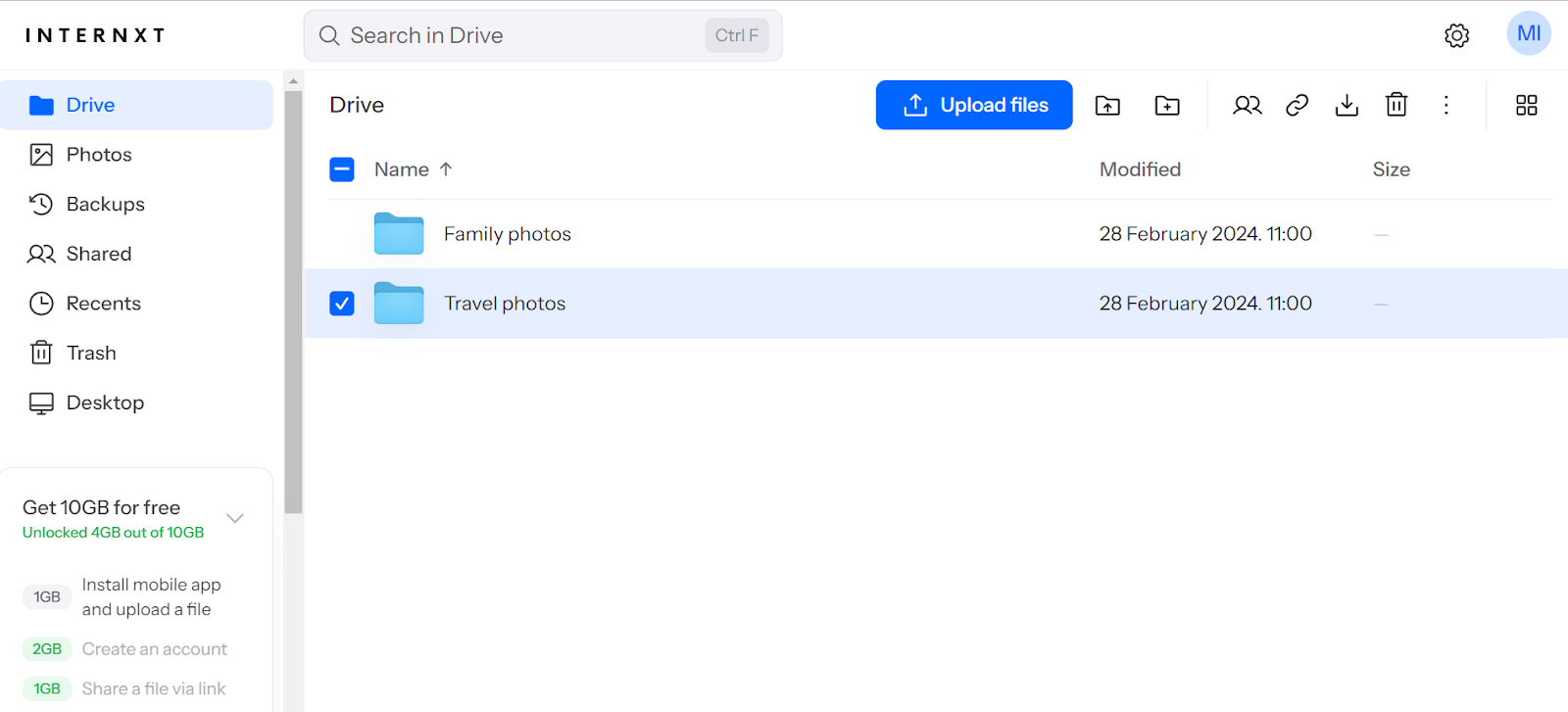
Internxt encrypts your files on your device before they are uploaded. The keys never reach Internxt's servers, so Internxt cannot read your photos. Securitum, a European penetration testing firm, verified that architecture in an independent audit in 2024. The code is open source on GitHub, so anyone can check the implementation.
The service runs on European servers and holds ISO 27001:2022 certification, HIPAA compliance, and GDPR compliance. Internxt is also the first cloud storage provider to deploy post-quantum encryption across all plans, which protects against future attacks from quantum computers on data stored today. Other zero-knowledge alternatives include Proton Drive and ente.io, though neither offers the same storage tiers or holds HIPAA compliance with an independent third-party audit.
Strengths
Apps are available on Windows, Mac, Linux, iOS, and Android. The Linux app is notable because no other service in this comparison supports it. Sharing uses password-protected links with optional expiry dates. There is no AI photo search, no face grouping, no auto-generated albums, because building those features would require reading the files.
Limitations
The 1GB free tier is not enough for evaluation and the photo browsing experience is straightforward rather than polished. Internxt is built as secure cloud storage for files and sync — it handles photos well but doesn't organize them. It is not a photo management app in the way Google Photos is. If you want smart albums and facial recognition, Google Photos is a better fit.
If you want the files stored somewhere the provider cannot reach, Internxt is the only option on this list that can deliver that — or browse safe cloud storage for other privacy-focused alternatives.
Google Photos
Storage and pricing
Google Photos storage runs on Google One and shares a quota with Gmail and Drive. You start with 15GB free. A few years of phone backups and a busy inbox will burn through it, so you may want to turn off automatic backups in Google Photos to save storage space.
Paid plans run from 100GB at $1.99/mo to 2TB at $9.99/mo. A lot of people end up upgrading to keep email working, not because they filled up on photos.
Privacy and data practices
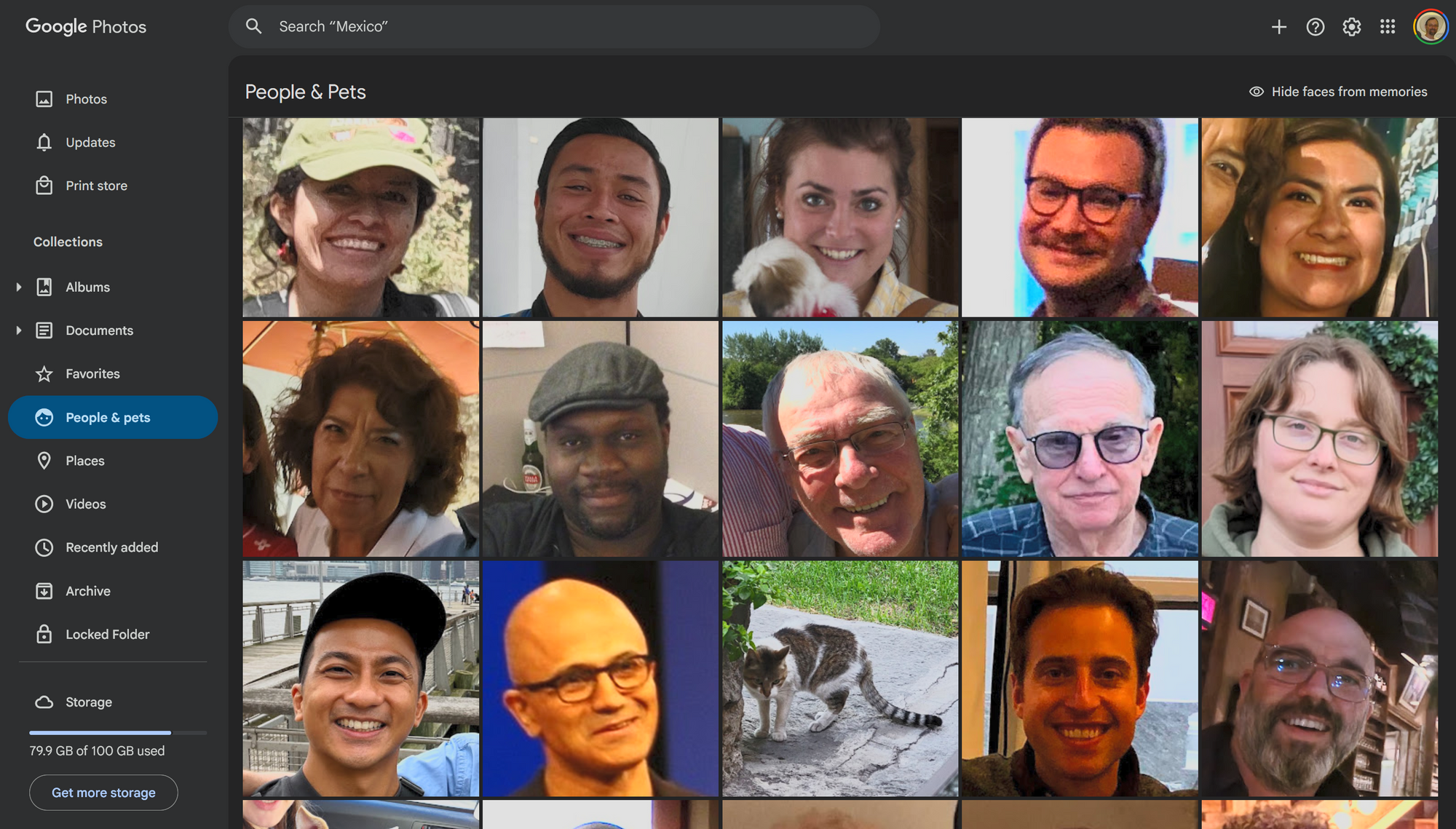
Google's privacy policy is direct that your content improves AI and ad products. Google holds the encryption keys and the AI search is built on reading the files. For a holiday album that trade is easy to accept. For medical photos, legal documents, or anything genuinely private, it is a different calculation.
Strengths
The search is the best of any photo app. Type a person's name, a location, or a rough date and it finds the right photos. Face grouping, auto-collages, and memory videos run without setup. On Android, photos back up in the background and you rarely have to open the app at all.
Limitations
Migrating out is harder than it looks. Google Takeout exports the files, but face groups, shared albums, and years of organized memories do not move with them. The shared quota with Gmail and Drive means a busy inbox competes with your photo library for the same storage cap — a distinction the Google Photos vs Google Drive comparison covers in full.
iCloud Photos
Storage and pricing
iCloud gives you 5GB free, which runs out fast. A few hundred photos and you are shopping for more storage. The full breakdown of iCloud storage plans starts at 50GB for $0.99/mo, then 200GB for $2.99/mo, then 2TB for $9.99/mo. The 50GB tier at $0.99/mo is the lowest entry price of any paid plan in this comparison.
Privacy and data practices
Apple does not use your photos for advertising, but standard iCloud gives Apple technical access to files, as it holds the encryption keys. There is an exception: Advanced Data Protection, added in 2022, enables genuine end-to-end encryption for iCloud Photos. It is off by default, requires setting up account recovery before enabling, and most users never turn it on.
Strengths
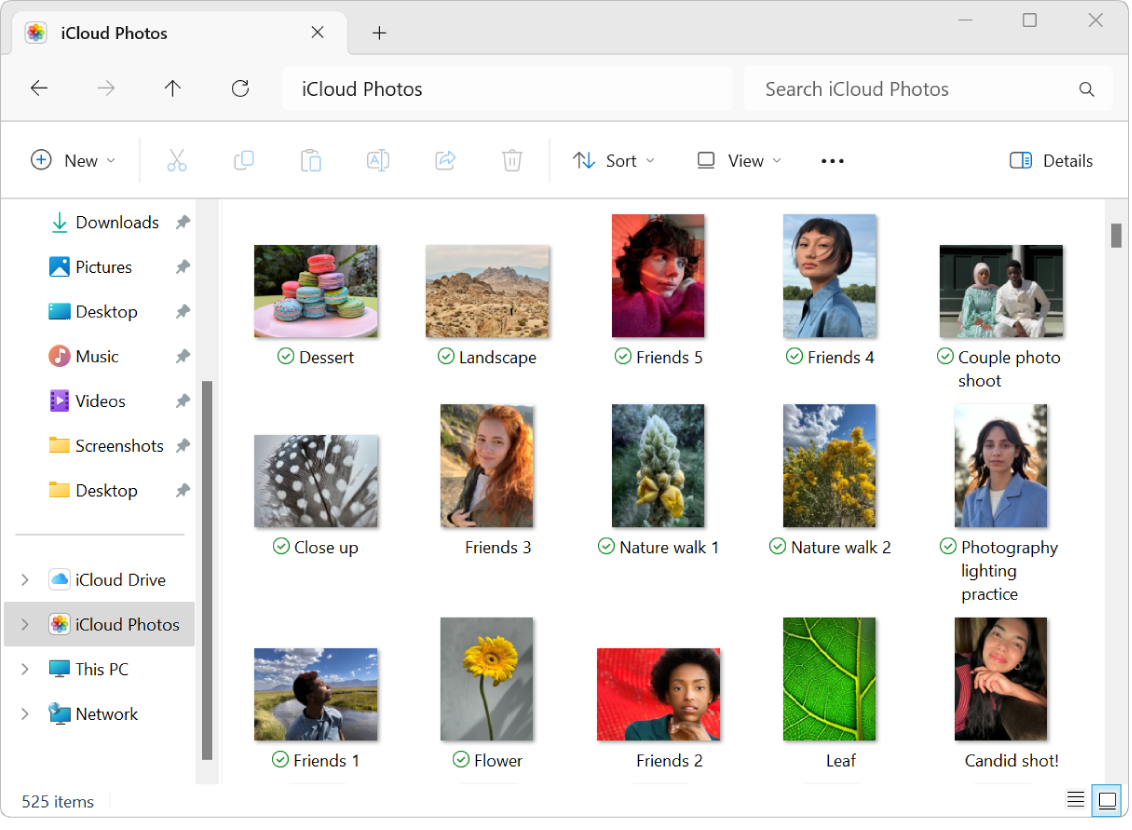
On Apple hardware it is seamless. Photos taken on your iPhone appear on your Mac and iPad without touching anything. Live Photos, burst sequences, and edits all sync correctly. Shared Albums work well for families. If everyone in your household is on Apple devices, there is little reason to look elsewhere.
Limitations
Outside Apple hardware things get awkward fast. The Windows app works but feels like an afterthought. There is no Android app at all. Advanced Data Protection — the feature that makes iCloud genuinely private — requires manual setup that most users skip. For anyone choosing between ecosystems, the iCloud vs Google Drive breakdown covers the differences in detail.

OneDrive
Storage and pricing
OneDrive comes with Microsoft 365, which most Windows users already pay for. The OneDrive pricing starts at $6.99/mo includes 1TB of storage alongside Word, Excel, and Outlook. For existing Microsoft 365 subscribers, there is no additional cost to use it for photos. The storage and the Office apps share a single subscription — the photo storage is effectively free if you are already paying for the software.
Privacy and data practices
Microsoft holds the encryption keys and scans content for policy violations including CSAM. Your photos are not used for advertising. There is no zero-knowledge option and no independent security audit.
Strengths
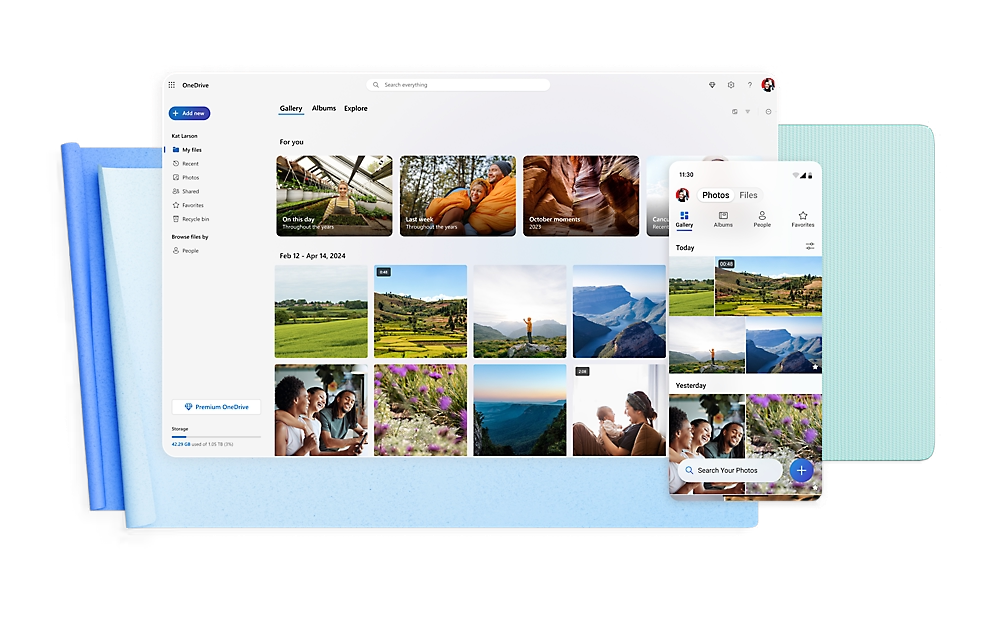
Camera roll backup runs automatically on iOS and Android with no configuration. For anyone already inside Microsoft 365, the 1TB is included at no extra cost. The deep Windows integration means photos backed up from a phone appear in File Explorer on Windows 11 without installing anything extra. For a full side-by-side with Apple's alternative, see OneDrive vs iCloud.
Limitations
OneDrive is cloud storage that also accepts photos, not a dedicated photo management tool. Search covers rough date and category filters but does not identify faces or recognize specific scenes the way Google Photos does. People not already paying for Microsoft 365 have no strong reason to start just for photo storage.
Amazon Photos
Storage and pricing
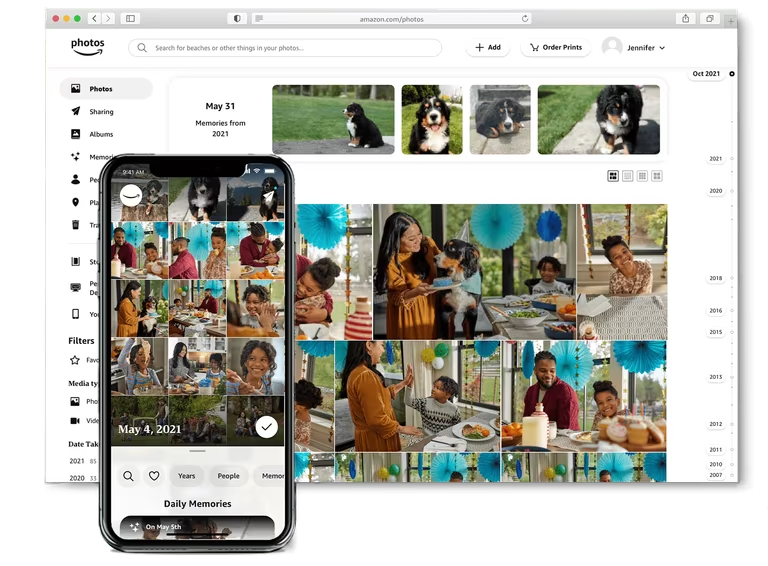
Prime members get unlimited photo storage included with their subscription. Most people who have Prime are not using it, which means they are paying another service for storage they already have. Without Prime, the free tier is 5GB. Paid standalone plans run from 100GB at $1.99/mo to 2TB at $6.99/mo.
Privacy and data practices
Amazon holds the encryption keys and reviews content for policy violations. The company says photo data is not used for advertising, but it has the technical ability to access the files. There is no zero-knowledge option and no independent security audit.
Strengths
For Prime members, unlimited photo storage at no additional cost is a genuinely strong value. The app backs up automatically on iOS and Android. Family Vault lets you pool storage with up to five other people on the same Prime account. RAW files are stored without compression, which makes it a reasonable secondary archive for photographers on Prime who do not want to pay for dedicated storage.
Limitations
Video is handled differently from photos. Files count against a 5GB cap, the same as any standard free tier. Amazon Photos works well for archiving still photos and less well as a full camera roll backup, since phones shoot video constantly and that fills the cap quickly. Most people who use Amazon Photos pair it with another service that handles video.

Backblaze
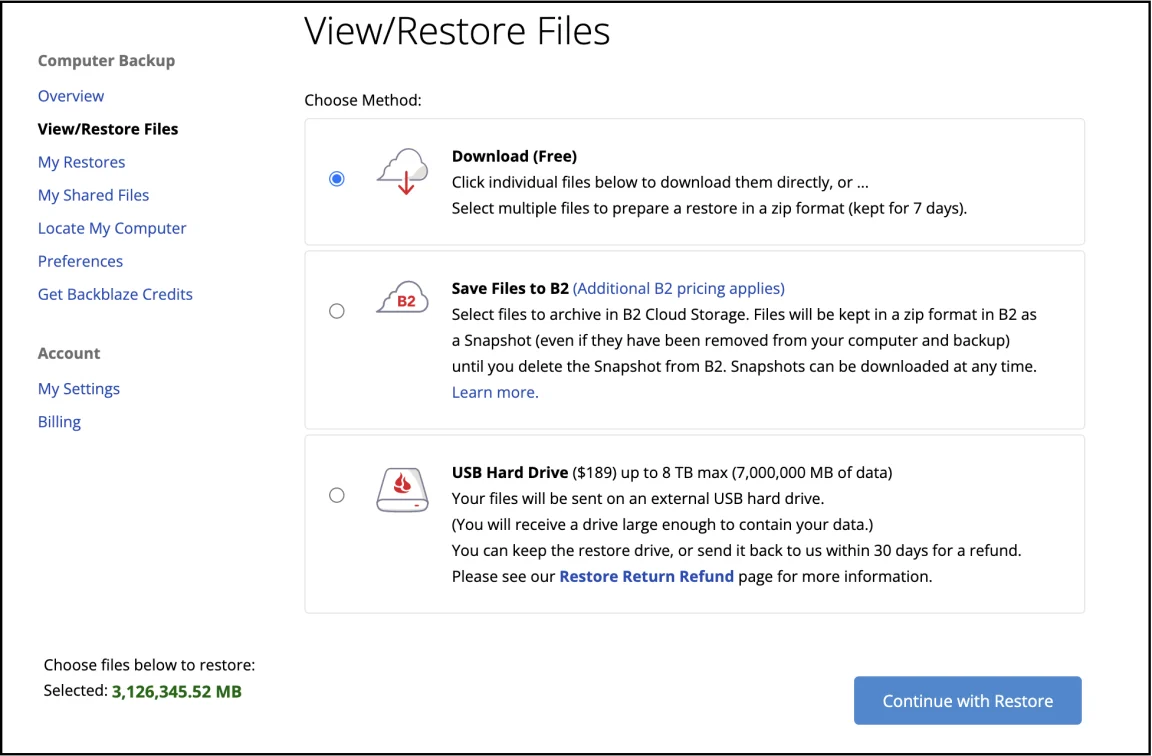
Backblaze is not a photo storage service. It backs up your entire computer for $9/mo with no storage cap. Photos are included because they are on your hard drive, not because Backblaze does anything specific with them.
There is no photo browsing, no album organization, no mobile camera roll backup, no sharing. Restoring files means downloading a zip archive or paying to have a hard drive shipped to you.
Serious photographers often run it alongside a primary service: Google Photos or Internxt for day-to-day access, Backblaze as an offsite copy of the full archive. At $9/mo for unlimited storage it is the cheapest way to keep a copy of your library somewhere physically separate from your home.
Cloud Storage for Photographers
RAW files average 25–80MB each depending on your camera. A serious shoot can run 10GB in an afternoon. Most casual photo storage services were not designed with that in mind.
Google Photos compresses by default. To store originals you need to set storage quality to Original and accept that your quota fills faster. Amazon Photos preserves RAW files for Prime members without compression, which is why photographers with Prime tend to use it as a secondary archive. Internxt stores files exactly as uploaded with no server-side processing, supports up to 5TB, and works with any file format including RAW. For photographers who also need HIPAA compliance for client work, it is the only option on this list that covers both.
Many photographers run a three-location setup: one copy on a local hard drive, one in a primary cloud service for access, and one in Backblaze as a disaster recovery copy. Unlimited storage at $9/mo makes the math easy. If you also need to deliver large batches to clients, see the guide on sending a large amount of photos.
Which Cloud Storage for Photos Is Right for You?
| Your situation | Best option | Why |
|---|---|---|
| Need privacy, zero-knowledge encryption | Internxt | Only option where the provider cannot read your files |
| Shoot RAW, need large storage | Internxt | Up to 5TB, no compression, no AI processing |
| HIPAA compliance required | Internxt | Only HIPAA-compliant option with an independent audit |
| Android user who wants things to just work | Google Photos | Best search and organization, backs up automatically |
| Everything is Apple | iCloud | Seamless on Apple hardware, no setup |
| Already paying for Microsoft 365 | OneDrive | 1TB already included in the subscription |
| Have Prime, mostly photos | Amazon Photos | Unlimited photo storage already included |
| Offsite backup for full hard drive | Backblaze | Unlimited storage at $9/mo, set and forget |
Frequently Asked Questions
Which is the best cloud storage for pictures?
Internxt is the best for privacy, Google Photos for search and organization, iCloud for Apple users, and Amazon Photos for Prime members who mostly store photos. The right answer depends on whether you prioritize features or control over your files.
What is the best way to store photos long term?
Three copies: one on your device, one in cloud storage, one offsite backup. For offsite, Backblaze covers unlimited storage at $9/mo.
Do Amazon Prime members get free photo storage?
Yes, Prime includes unlimited photo storage through Amazon Photos at no additional cost. Videos count against a standard 5GB cap.
Where can I store all my photos without paying?
Google Photos gives you 15GB free shared across Gmail, Drive, and Photos. Internxt offers 1GB of free encrypted storage with no ads and no data collection.
Which cloud storage for photos is the most private?
Internxt. Files are encrypted on your device before upload and Internxt never holds the decryption keys, verified by Securitum in 2024.
What are the best Google Photos alternatives?
For privacy, Internxt and Proton Drive both use zero-knowledge encryption so the provider cannot access your files. For Apple users, iCloud Photos is the most seamless switch. For unlimited storage without a subscription, Amazon Photos covers photos at no extra cost for Prime members. Each trades Google's search and AI organization features for something Google Photos does not offer.
Why should I not use Google Photos?
For most people Google Photos is a reasonable choice — it is free up to 15GB, works automatically, and has the best search of any photo app. The case against it is access: Google holds the encryption keys and its systems read your photos to power search and AI features. Google's privacy policy confirms this content is used to improve products. If you store sensitive material — medical records, legal documents, private correspondence as images — a service where the provider cannot read the files is a more appropriate choice.
Can Google access my Google Photos?
Yes. Google holds the encryption keys and its systems read your photos to power search and AI features, which its privacy policy states is used to improve products and inform ad targeting.
Is iCloud Photos safe for sensitive photos?
Apple does not use photos for advertising, but standard iCloud still gives Apple technical access to files. Advanced Data Protection enables end-to-end encryption but must be manually turned on.
What is the difference between cloud backup and cloud photo storage?
Cloud photo storage is designed for access: browsing, searching, sharing from any device. Cloud backup is designed for recovery if something goes wrong.
Which is better for photos, Google Drive or Google Photos?
Google Photos has dedicated search, face grouping, and sharing features built for images. Both draw from the same Google One storage quota.
Finding the right home for your photos
You probably already have a photo service. Google Photos came with your phone, iCloud keeps asking you to upgrade, OneDrive showed up when you installed Office. Most people never chose one — it just happened.
That is fine for a holiday album. It gets more complicated when the photos are medical, legal, or anything you would not hand to a stranger. The difference between these services is not marketing language, it is who holds the keys.
Pick the one that fits how you actually use it. If that changes, the files are yours to move.