
What is a Sovereign Cloud?

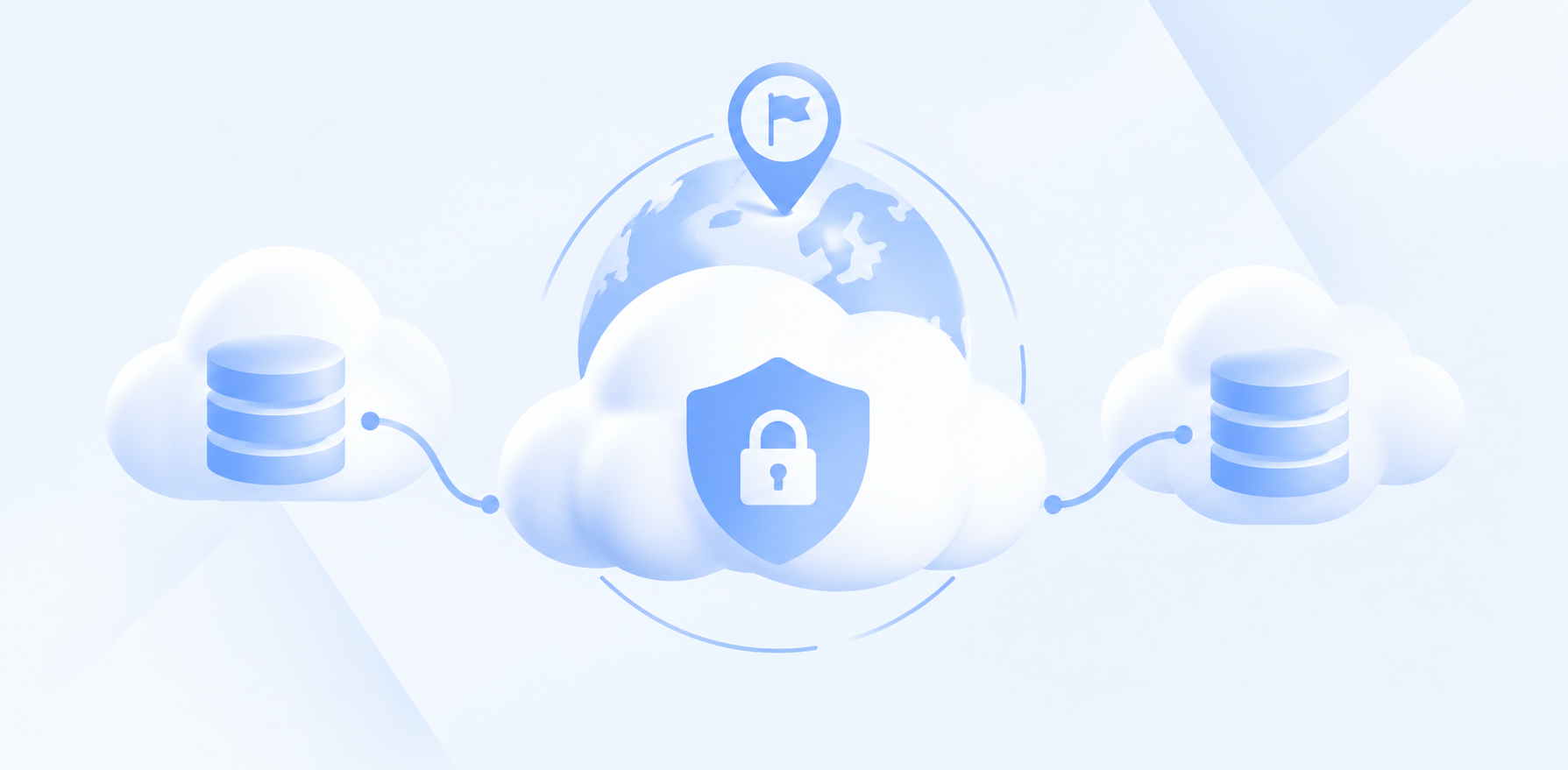
A sovereign cloud is a cloud computing environment designed to keep data, infrastructure, and operations under the control of a specific country or jurisdiction.
It helps organizations maintain control over who can access their data and how it is managed. Depending on the provider and service, this may include storing data within national borders, using locally governed infrastructure, and ensuring that operations comply with regional regulations.
For example, a company in Spain might use a sovereign cloud such as Internxt Drive or Internxt S3 to keep its data in Spain and ensure it is handled in accordance with European and Spanish laws and GDPR cloud storage regulations.
This gives organizations greater control over their data, improves security, and helps them meet legal requirements.
- Data sovereignty: control over where data is stored and processed, and which laws govern it.
- Operational sovereignty: control over who operates, maintains, and administers the cloud infrastructure.
- Technical sovereignty: control over encryption keys, access permissions, software dependencies, and security mechanisms.
- Legal sovereignty: clarity about which legal jurisdictions apply to the provider, its infrastructure, and its operations.
- Supply chain sovereignty: visibility and control over the technology providers, software, and hardware on which the cloud depends.
Sovereign cloud solutions are especially important for governments, healthcare providers, financial institutions, and businesses that handle sensitive information because they offer greater control, improve security, and help meet legal requirements.
Table of contents
- Why is a sovereign cloud important?
- Top benefits of enterprise sovereign cloud
- Sovereign cloud vs conventional cloud providers
- What is the best sovereign cloud storage?
- Related products
- Frequuently asked questions
Why is a sovereign cloud important?
A sovereign cloud is important for businesses and enterprises to store sensitive information in Europe or specific jurisdictions to keep data protected under the specific laws of that region. If data is stored across multiple countries, then data may be subject to different laws or external access requests.
For example, a European company storing customer data in both Europe and the United States may be subject to European data protection laws, such as the GDPR, as well as applicable US laws.
Because of this, without a sovereign cloud, US authorities could request access to data held by a US-based cloud provider, even if the data is stored in Europe, creating legal and compliance challenges for the company.
A sovereign cloud, such as Internxt, helps companies build greater trust and independence with data stored in European cloud data centers, open source software, multiple compliance certificates, and end-to-end encryption.
Top benefits of enterprise sovereign cloud
Data privacy and protection
A sovereign cloud helps protect sensitive data by setting clear rules about where data is stored, who can access it, and how it can be used to limit cross-border transfers and prevent unauthorized access to data.
Example: A hospital using a sovereign cloud can apply strict controls to patient records and help ensure that the information is handled according to applicable data protection laws.
Legal and regulatory compliance
Organizations must comply with laws and regulations concerning data protection, storage, processing, and transferring data across borders. A sovereign cloud helps meet these obligations by keeping data within an approved jurisdiction to help with security audits and regulatory reporting.
For Europe, there is GDPR, which sets strict rules for how companies store, collect, and handle user data.
There is a proposal called the European Cybersecurity Certification Scheme for Cloud Services (EUCS), which aims to establish common cybersecurity requirements and certification standards for cloud services.
Example: A sovereign cloud can help financial institutions maintain compliance by keeping data within an approved jurisdiction, controlling who can access it, and maintaining records for audits.
Operational control
Operational control refers to how an organization manages and oversees how its cloud infrastructure, systems, and data are operated, such as in a region or country or in specific data centers.
Example: a national government may require its cloud infrastructure to be managed by authorized local personnel and restrict administrative access from outside the country. This helps the government maintain greater control over its systems and sensitive information.
Encryption
Data encryption is one of the top benefits of enterprise sovereign cloud storage to protect sensitive data, even when data is stored or transferred, and helps comply with local data protection laws by keeping data private, secure, and under the control of the organisation that owns it.
User restrictions
A sovereign cloud also allows organizations to limit access that employees, partners, and, in some cases, cloud providers have to data to prevent unauthorized access or data breaches.
Reduced dependency on foreign providers
Reduced dependence on foreign providers allows enterprises to maintain greater autonomy over their technology choices and more flexibility when choosing a cloud provider.
By relying on cloud services governed and operated within their required jurisdiction, enterprises can reduce the risk of being affected by foreign government policies, international trade restrictions, or changes in relationships between countries
Sovereign cloud vs conventional cloud providers
Now we’ve answered what is a sovereign cloud and covered the benefits; we can now cover how conventional cloud providers differ in how they manage data, legal jurisdiction, operational control, and regulatory compliance.
While conventional cloud providers often focus on scalability, global availability, and a wide range of services, sovereign cloud providers prioritize data sovereignty, local control, and compliance with specific national or regional requirements.
Conventional cloud providers include global companies that offer cloud computing and storage services. They are not necessarily sovereign cloud providers by default, although some offer separate services designed to meet sovereignty requirements; examples include:
- Amazon Web Services (AWS): Provides computing, storage, databases, and infrastructure for businesses worldwide.
- Microsoft Azure: Offers cloud infrastructure, application hosting, databases, and enterprise IT services.
- Google Cloud: Provides cloud infrastructure, data analytics, AI, and application hosting.
For personal cloud storage, conventional cloud providers include:
- Google Drive: Stores and synchronizes files, documents, and photos.
- Microsoft OneDrive: Provides file storage, synchronization, and integration with Microsoft 365.
- Apple iCloud Drive: Synchronizes photos, files, backups, and other data across Apple devices.
- Dropbox: Offers file synchronization, sharing, and backup.
- Amazon Photos: Provides online photo storage and organization
The following table compares their key characteristics, benefits, and limitations to further understand may be more suitable for different organizational needs.
| Feature | Sovereign Cloud | Conventional Cloud |
|---|---|---|
| Data Residency | Designed to keep data within a specific country or jurisdiction according to sovereignty requirements. | Data may be stored and processed across multiple countries, depending on the provider and service configuration. |
| Legal Jurisdiction | Designed to keep data and operations under the laws and jurisdictional controls of a specified region. | The provider's country of incorporation, ownership, and international operations may expose services to multiple legal jurisdictions. |
| Operational Control | May require local personnel, restricted administrative access, and operations managed within the specified jurisdiction. | Operations may be managed by globally distributed teams, depending on the provider's policies and service model. |
| Data Access | Access can be restricted through jurisdiction-specific policies and administrative controls. | Access depends on the provider's security policies, administrative structure, and customer configuration. |
| Regulatory Compliance | Can help organizations meet local data protection, residency, and industry-specific requirements. | Offers compliance tools and certifications, but organizations must verify that the services meet their specific requirements. |
| Data Sovereignty | Prioritizes control over where data is stored, how it is managed, and which laws apply. | Sovereignty depends on the provider's jurisdiction, service design, contractual terms, and configuration. |
| Foreign Legal Exposure | Can reduce certain risks through local ownership, jurisdictional safeguards, and restricted external access. | May involve greater exposure to foreign laws or government access requests, depending on the provider and circumstances. |
| Service Availability | Service availability and geographic reach depend on the sovereign provider's infrastructure and service portfolio. | Often offers extensive global infrastructure, multiple regions, and a broad range of cloud services. |
| Technology and Integration | Available technologies and integrations may be more limited, depending on the provider. | Often provides a wide range of technologies, managed services, and third-party integrations. |
| Cost | May involve higher costs due to local infrastructure, staffing, and additional sovereignty controls. | Offers a range of pricing models and economies of scale, depending on usage and service requirements. |
| Ideal Use Cases | Government, defence, healthcare, finance, and enterprises handling sensitive or regulated data. | General business applications, development environments, global services, analytics, and scalable workloads. |
What is the best sovereign cloud storage?
Internxt S3 enterprise cloud storage
Internxt S3 cloud object storage built on open-source technology offering total data sovereignty for European object storage.
S3 cloud storage with Internxt offers an alternative to AWS, Azure, and Google Cloud, offering a scalable cloud storage solution with a fixed price of €7/TB for large businesses or enterprises to store petabytes of data for secure and open-source object storage, backups, and rapid access to large amounts of data.
Internxt offers full GDPR compliance, plus HIPAA compliance to protect patient data for healthcare providers, ISO 27001 for IT, finance, healthcare, government, and professional services, and SOC 2 for SaaS providers, cloud storage providers, data processors, and other service organizations handling customer data.
For a European cloud storage and affordable alternative to conventional cloud storage for business, visit the Internxt S3 website to talk to one of our sales team to get started with full data sovereignty and security for all industries.
Internxt Drive
Unlike conventional cloud storage providers that operate globally, Internxt Drive is a personal cloud storage service that offers data sovereignty by giving users greater control over where their personal data is stored, who can access it, and which laws protect it.
To keep your data under control, Internxt offers redundant data storage within its European cloud data centers, plus:
- Privacy: Helps protect personal files, photos, and documents from unauthorised access.
- Data control: Keeps data within Europe.
- Legal protection: Helps ensure data is handled according to local data protection laws.
- Security: Internxt uses post-quantum, end-to-end encryption to help protect information from being accessed by unauthorised parties.
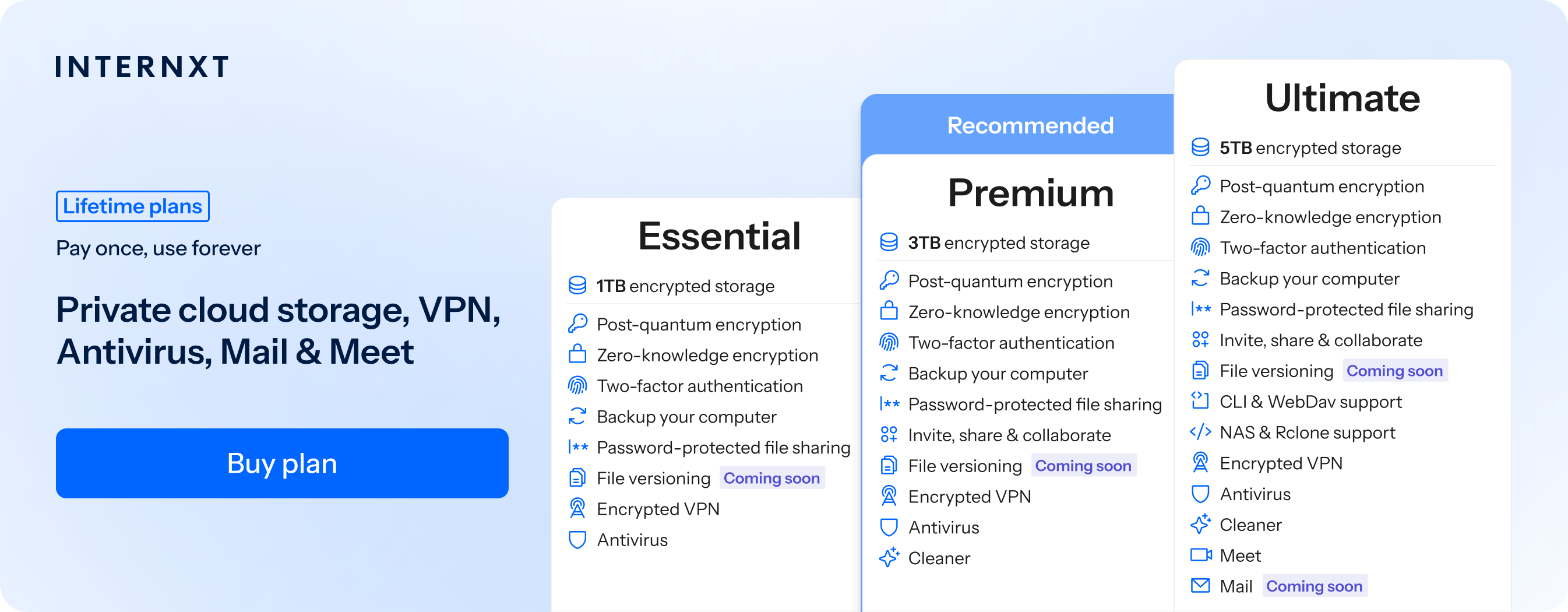
With Internxt, you can reduce your dependency on Google Drive with Internxt’s full product suite, now offering 85% off all monthly and lifetime cloud storage plans, which you can claim below.
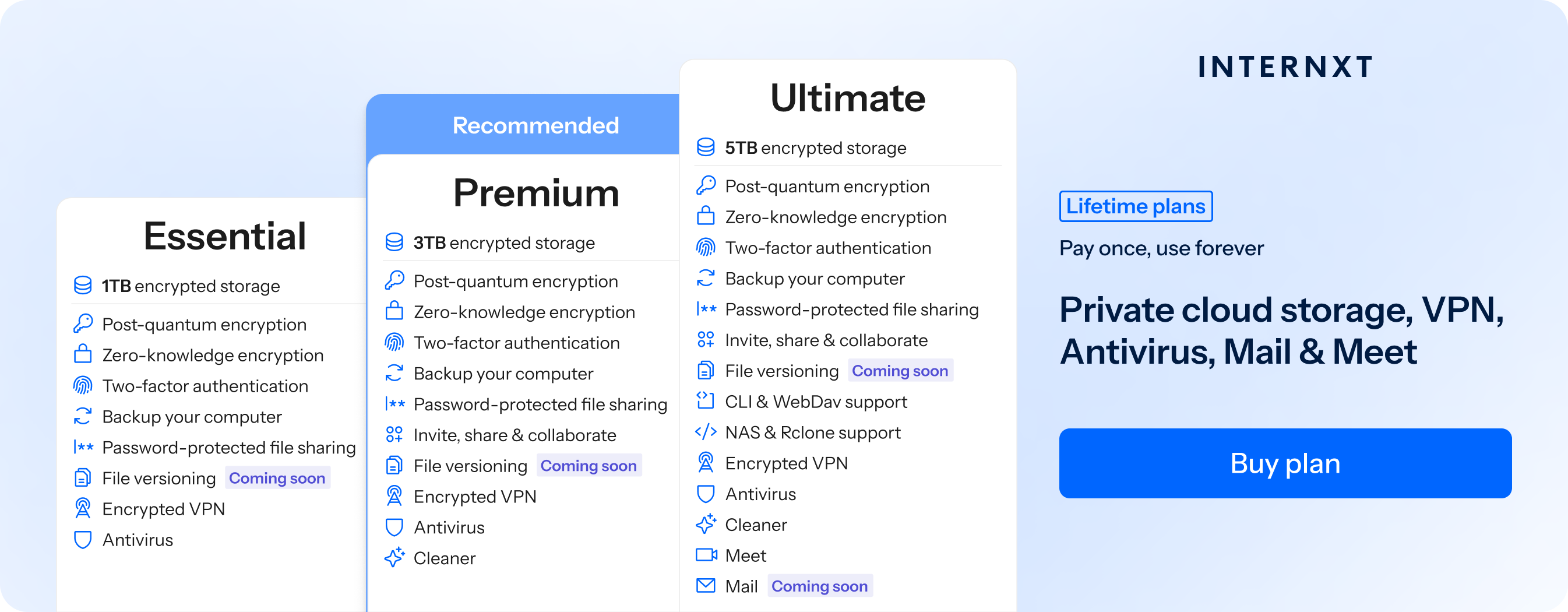
All plans offer zero-knowledge encrypted cloud storage, and you can get everything you need for your online privacy with an Ultimate plan, which includes Internxt Mail, Internxt Photos, and much more.
| Plan | Storage | Features | Annual (Paid monthly) | Lifetime Cost |
|---|---|---|---|---|
| Essential | 1TB | €1.99/month | €380 | |
| Premium | 2TB |
|
€3.99/month | €580 |
| Ultimate | 5TB |
|
€5.99/month | €780 |
| *Prices are correct at the time of writing and are subject to change. For latest prices, check https://internxt.com/offerblogen | ||||
Related products
https://internxt.com/cloud-storage-backup-solutions
https://internxt.com/gdpr-cloud-storage
Frequently asked questions
What is a sovereign cloud?
A sovereign cloud is a cloud computing environment designed to keep data under the control of a specific country or jurisdiction, following its laws and regulations.
Why is data sovereignty important?
Data sovereignty helps protect privacy, maintain legal compliance, and give individuals and organisations greater control over their information.
What is the difference between a sovereign cloud and a traditional cloud?
A sovereign cloud prioritises data control, jurisdiction, and legal compliance, while a traditional cloud may store or process data across multiple countries, which could allow access to your data according to the local laws.
Is sovereign cloud storage suitable for personal use?
Yes. It can be a good option for storing personal files, photos, and documents while maintaining greater control over where data is stored and how it is protected.
Where is data stored in a sovereign cloud?
Data is typically stored within a specific country or region, depending on the provider's infrastructure and sovereignty commitments. Internxt is based in Valencia, Spain, with data centers across Europe.
Who should use a sovereign cloud?
Individuals, businesses, and public organisations that prioritise data privacy, regulatory compliance, and control over their information can benefit from sovereign cloud services.
What should you look for in a sovereign cloud provider?
Look for transparent data storage locations, strong encryption, clear access controls, reliable security practices, and clear information about who controls your data.
Top benefits of enterprise sovereign cloud
Enterprise sovereign keeps data within defined legal jurisdictions, supports compliance with regulations such as GDPR, and reduces the risks associated with unauthorised access. With strong encryption, local data governance, and greater operational control.